India's waste problem is scaling faster than its cities.
What is also of concern is that not only is the quantity increasing, but the composition of waste is changing — from a high percentage of biodegradable waste to non-biodegradable waste. The waste characterisation determines the strategy for its management. And then there is the problem of legacy waste lying in dumpyards scattered across cities.
Over the past few years, there has been a rapid shift in the strategic direction of waste management in the country. The flagship programmes of the Government of India — the Swachh Bharat Mission, AMRUT, and the Smart Cities programme — have all created an enabling environment to drive this transformation.
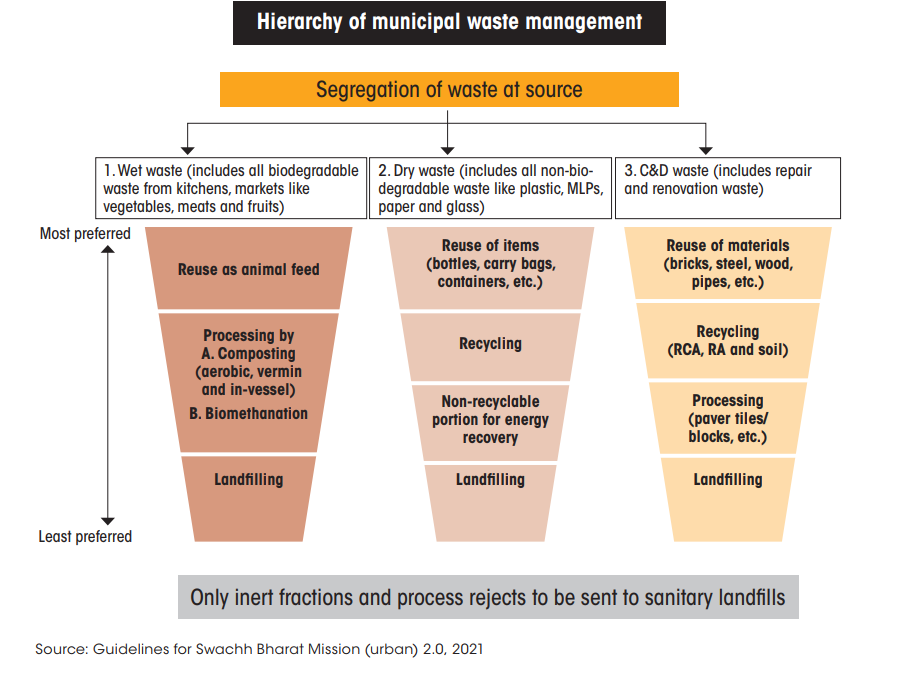
Swachh Bharat Mission (SBM) 2.0, launched September 1, 2021, is built on a clear strategy: source segregation, processing of waste (biodegradable and non-biodegradable), and minimising what's sent to landfill. Under SBM 2.0 guidelines, only inert waste and process rejects — never more than 20% of total waste — may go to landfill. The goal: a zero-landfill city.